
+351 968 497 129 (24h)
+351 968 497 129 (24h)

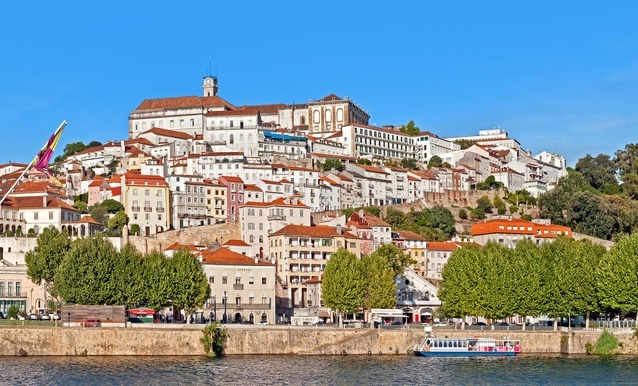
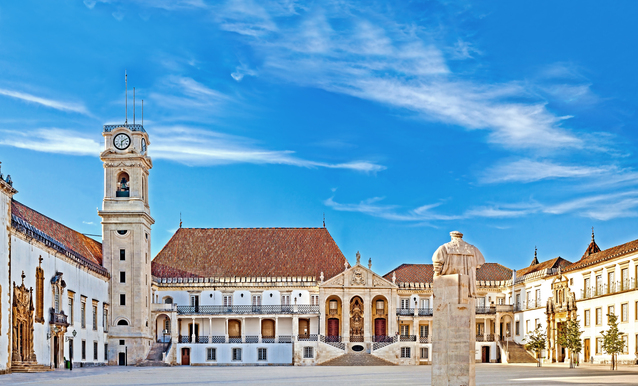
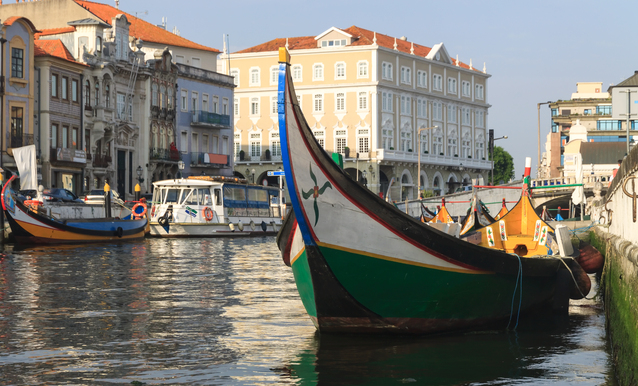
Exit towards Aveiro, visit the Church of Mercy and the Eco-Museum of Troncalhada. Then, travelling through the Aveiro Estuary, we reach Ílhavo, where we will visit the famous Vista Alegre Porcelain Factory, taking the opportunity to buy one of these magnificent pieces. Then head towards Coimbra where we suggest a stop for lunch. In the city of Coimbra, we will visit Old Cathedral, Monastery Church of Santa Cruz and the Convent of Santa Clara. We finish our visit at the University of Coimbra, one of the oldest universities in the world.
AVEIRO
The city of Aveiro was once a great seaport and is today known as the "Portuguese Venice", with its coloured “moliceiros” (local boats), similar to gondolas, with natural ponds and elegant 19th-century architecture. It is a special place where the old combines with the modern. Along Aveiro Estuary, we find Ílhavo, a seaside town that boasts the maritime heritage of Aveiro and where the famous Vista Alegre Porcelain Factory is located.

The “moliceiros”, typical boats of the Aveiro Estuary, are built in pine wood and despite their colourful and humorous decoration, they are very stylish. In Praia da Barra, where the Aveiro Estuary joins the sea, you find the highest lighthouse in Portugal. In Costa Nova Beach you can gaze upon the typical houses, the "palheiros", famous for their painted façades with coloured straps.

The Vista Alegre Porcelain Factory, founded in 1824 is internationally recognised for its unique quality. In the premises of the factory, the Vista Alegre Museum, opened in 1964, exposes the record of developments in the manufacture of porcelain. In this Museum, the visitor is invited to enter the world of the earliest glass made, unique parts of the Portuguese monarchy, the commemorative dates and significant parts in various decorations executed over the course of nearly 200 years of manufacture.
COIMBRA
Coimbra is considered one of the most important Portuguese cities, due to its infrastructures, organisations and companies, besides its historical importance and privileged geographical position in the centre of the country. Coimbra is also a great reference for academics in the areas of Education and Health.

The University of Coimbra founded in 1290 by King Dinis was the first in the country and is one of the oldest in Europe. Eça de Queirós was one of many literary figures of the 19th century who studied in Coimbra. The tower is one of the symbols of the University and can be seen throughout the city. Within the University we highlight the Museum of Sacred Art, the Chapel of St. Michael and the famous Joanina Library with Baroque style, one of the most fantastic works of art of this architectural style.

The Old Cathedral of Coimbra is the only one of the Portuguese Romanesque cathedrals of the time of the Reconquista to have survived relatively intact until the present day. The New Cathedral, near the University, was founded by the Jesuits in 1598. In 1772, after the Jesuits be banned from Portugal by the Marquis of Pombal, the Bishopric of Coimbra was transferred from the old Romanesque Cathedral for the spacious Jesuit Church.

The construction of the Monastery of Santa Clara-a-Nova in the 17th century was designed to accommodate the religious Poor Clares. This new baroque monastery has replaced the old Monastery of Santa Clara-a-Nova that represented the experimentation of the Gothic style with its first foundation in 1283 by the initiative of a wealthy noble Lady. The Monastery of Santa Clara-a-Nova associated with the figure of Queen Saint suffered various reforms, by its extinction in 1311 and by the flood that happened due to its location on the bank of the Mondego River.
Price per person 65.00€
Discount for groups
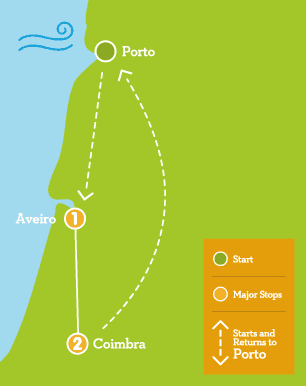
Tour Aveiro - Coimbra


