
+351 968 497 129 (24h)
+351 968 497 129 (24h)
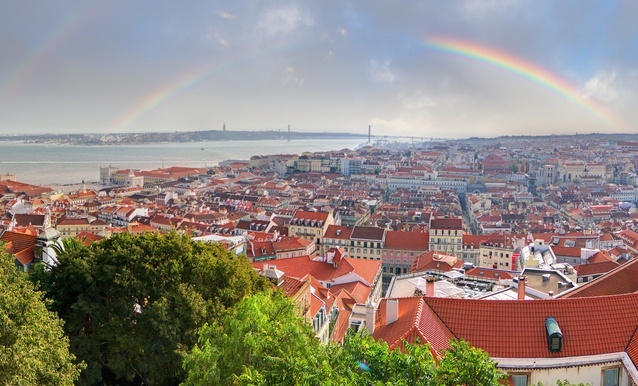


Exit in the direction of the Marquis of Pombal, visit the Top of Parque Eduardo VII Park. Descent to Liberty Avenue, through Rossio Square, Commerce Square, Upper District, Alfama and St. George Castle. Along the River Tagus, visit the Belém Tower, the Monument to the Discoveries and the Jerónimos Monastery. We suggest a stop for lunch in a typical restaurant, and then towards the Expo where you will have time to visit the Lisbon Oceanarium and some emblematic museums.
LISBON
Known as the city on the seven hills its name comes from Olisipo, a name that the town already had before the Roman occupation, in 205 BC. Located in an area of high-intensity seismic, it suffered various earthquakes over the centuries, having the 1755 earthquake being followed by a tsunami and fire, destroying the entire waterfront of the city. The reconstruction of the city plan implemented by Marquis of Pombal is still visible on the streets of Lisbon, mostly in downtown Lisbon. Lisbon was one of the main centres of introduction and development of Christianity in the Iberian Peninsula.

The Rossio Square, with the official name of D. Pedro IV, and with a statue representing him, is a meeting point of the city with cafes and pastry shops where the famous Swiss Pastry is located. In the north side of the square, you can find the National Theatre D. Mary II. At the base of the statue, the four female figures represent allegories to Justice, Strength, Wisdom and Restraint, qualities assigned to D. Pedro IV.

The St. George Castle, once Moorish and residence of Kings, was transformed in the 30s in a public garden. The current name derives from the devotion of the St. George Castle, patron saint of the knights and the crusades, made by order of D. João I in the 14th century. It stands in a dominant position on the highest hill in the historic centre of the city, offering visitors one of the most beautiful views of the city and Tagus River estuary.

The Jerónimos Monastery dated back to the 16th century and was built by King Manuel I. It constitutes the pinnacle of Manueline architecture as we can observe in the portal carved into the south facade. The monastery was funded by profits from the trade in spice, precious stones and gold after Vasco da Gama has doubled the Cape of Good Hope and discovered the sea route to India, establishing the Portuguese trade routes in the Indian Ocean. In this Monastery, Vasco da Gama and Luís Vaz de Camões are buried.

The Monument to the Discoveries lies on the right bank of the Tagus River. The monument was erected to honour the elements involved in the Portuguese Discoveries. It presents itself in the form of a Caravel, with the shield of Portugal on the sides and the sword of the Royal House of Avis over the entrance. You can also see the statues of Portuguese Heroes related to the Discoveries, among other illustrious figures of the time.

The Belém Tower, a construction initiated in 1514 under the reign of D. Manuel I and completed in 1521, was considered a fortress once positioned in the Centre of the River Tagus. It is a starting point for explorers of the Discoveries and a reference to the explorers that were returning from the Indies and of the New World and is a symbol of power and expansion. The beauty of the Tower is in the exterior decoration, the rooms of the Tower also deserve a visit because of the gallery and the panorama that one enjoys.

The Commerce Square better known as Palace Yard was the site of the Royal Palace for 200 years. This Palace, as well as its library with 70 000 volumes, were destroyed by the 1755 earthquake. This square was one of the main objectives of the plan of reconstruction of Marquis of Pombal. In the centre of the square is the equestrian statue of King José I "The Reformer". These days space makes way to one of the most cosmopolitan and lively places of Lisbon, with famous cafes, restaurants and nightclubs.

The National Tile Museum is installed in the former Madre Deus Convent in Lisbon, founded in 1509 by Queen Leonor. It is one of the most important museums of Portugal for its singular collection dedicated to tile and distinguishing artistic expression of Portuguese culture. Its collections allow you to make a journey through the history of tile since the 15th century till the present time.

The location of the Lisbon World Exposition of 1998 is now known as Park of Nations or Expo. Contemporary architecture has become a centre of cultural activities with attractions and recreation spaces for the family. Here we can visit the Pavilion of Knowledge, a modern Museum of Science and Technology with various interactive exhibits. The Vasco da Gama Bridge, the longest bridge in Europe, has 17 Km and was built for this exhibition. What until then was an industrial area has now become the most modern area of the city of Lisbon.

Considered the jewel of Expo`98, the Oceanarium is located in Park of Nations (Expo) and is installed on a pier surrounded by water. It is the largest Aquarium in Europe and is among the three largest in the world. We can see an impressive collection of species, many different fishes, mammals and other inhabitants of the marine world.
Price per person 55.00€
Discount for groups

Tour Lisbon


